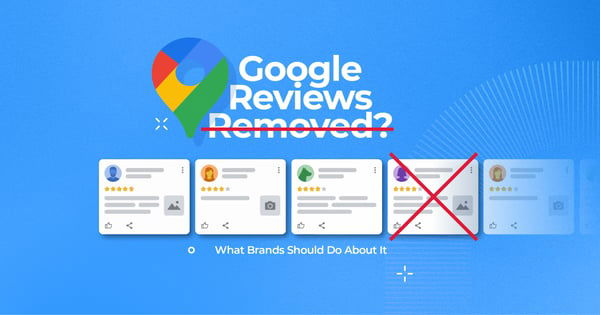
Why Google Reviews Are Being Removed in 2026 And What Brands Should Do About It
- Local SEO
- Multi-Location
- Reviews & Reputation
- How-to Guides
- AI Search
Over the past months, many brands have started noticing something unusual: Google reviews disappear, sometimes in noticeable volumes, and often without a clear explanation.
For multi-location brands, this isn’t a small or isolated issue. Reviews directly influence:
- Local rankings
- Customer trust and perception
- Conversion and in-store visits
And while it may feel random at first, it isn’t. What we’re seeing is part of a broader shift in how Google evaluates authenticity, behavioral patterns, and trust signals at scale.
What’s Actually Changing in 2026
Google has always had systems in place to moderate reviews, but the way those systems operate has evolved significantly.
Instead of only filtering reviews at the moment they are submitted, Google now:
- Re-evaluates existing reviews, sometimes going several years back
- Looks at patterns across reviews, not just individual entries
- Uses AI to assess whether content and behavior align with real-world activity
According to Google’s updated guidelines, reviews should reflect genuine, first-hand experiences. That principle hasn’t changed, but the depth and consistency of enforcement clearly has.
In practice, trust is no longer a one-time check. It’s something that gets continuously reassessed.
Why Reviews Are Being Removed
From what we’re seeing across accounts and industry insights, removals typically fall into a few recurring categories.
1. Unnatural review activity patterns
This is one of the most common triggers, especially for growing businesses.
Signals that can raise flags include:
- Sudden spikes in reviews within a short time period
- Multiple reviews submitted within minutes or hours
- Clusters of reviews that appear to originate from similar sources
Even when reviews are genuine, these patterns can resemble coordinated activity.
2. Generic or low-detail review content
AI systems are increasingly able to distinguish between surface-level feedback and real experience.
Reviews that are more likely to be filtered:
- “Great service”
- “Nice place”
- Very short, repetitive phrasing
Whereas reviews that tend to be more stable include:
- Specific services or products mentioned
- Context around the visit
- Personal experience details
3. Reviewer behavior signals
The credibility of a review is also influenced by the reviewer’s activity.
Potential risk signals include:
- Very new or inactive accounts
- High volume of reviews in a short timeframe
- Repetitive reviewing patterns across businesses
This means the focus is no longer just on what is written, but also who is writing it and how.
4. Location and device clustering
A commonly overlooked factor is how reviews are submitted.
Patterns that can trigger filtering:
- Multiple reviews from the same IP or WiFi network
- Reviews submitted on-site (e.g. via QR codes or tablets)
- Device clustering within a short timeframe
These setups are convenient operationally, but increasingly risky from a signal perspective.
5. Review gating and selective collection
This is where enforcement has become noticeably stricter. The US Federal Trade Commission has made it clear that selectively collecting positive reviews can be misleading. Google’s systems are increasingly aligned with this stance.
If a profile has hundreds of reviews and zero negatives, Google’s AI flags it for “sentiment manipulation” and might “Shadow Ban” the profile, freezing all new reviews for 30-90 days.
Practices that now carry risk:
- Asking only satisfied customers for reviews
- Filtering feedback before sending review requests
- Incentivizing reviews
5-Star Generic Reviews Are Under Risk
One pattern that stands out across many cases is that removed reviews are often: 5-star, highly positive, and generic
While that may seem counterintuitive, it reflects how trust is now evaluated.A profile that looks too perfect:
- lacks natural variation
- appears less credible
- can signal potential manipulation
Why This Matters More Than Before
Reviews are no longer just a conversion factor; they are now part of how search systems interpret and rank your business.
The recent research still shows:
- 97% of users read reviews before making decisions
- 74% prioritize recent reviews
At the same time:
- Reviews influence local rankings
- They are used in AI-generated summaries
- They shape whether your business is recommended at all
So when reviews are removed, the impact goes beyond volume as it affects how your business is understood across search and AI-driven discovery.
What This Means for Multi-Location Teams
For teams managing multiple locations, this shift is less about quick tactics and more about building reliable processes.
Review management is no longer: → “How do we get more reviews quickly?”
It becomes: → “How do we maintain consistent, trustworthy signals across every location?”
That usually involves:
- Clear internal guidelines
- Standardized workflows
- Ongoing monitoring
- Alignment across teams and markets
What to Do If Reviews Are Being Removed
1. Prioritize prevention over recovery
In most cases, removed reviews are difficult to recover.
It’s more effective to:
- Understand what triggered removals
- Adjust your process moving forward
If a removed review was genuinely legitimate, you can try to recover it by submitting an appeal through the Google Business Profile Help Tool.
2. Start tracking your reviews
This is simple but often overlooked.
Keep a record of:
- Review text
- Username
- Date
This allows you to:
- Identify patterns
- Understand what gets removed
- Have evidence if needed
3. Rethink how you collect reviews
Instead of:
- Asking only satisfied customers
- Collecting reviews immediately on-site
Shift toward:
- Neutral requests to all customers
- Follow-ups after the visit
- Natural, unscripted feedback
4. Focus on quality over volume
Encourage reviews that:
- Describe specific experiences
- Mention services or products
- Provide context
These are more resilient and more valuable both for users and for search systems.
5. Keep review activity steady
Avoid:
- Short-term campaigns that create spikes
Aim for:
- A consistent, ongoing flow of reviews
6. Diversify beyond Google
Local discovery is no longer limited to one platform. Relying solely on Google creates unnecessary risk and limits visibility.
Consumers increasingly rely on:
- Maps platforms
- Social channels
- AI-driven recommendations

Managing Reviews at Scale
For multi-location brands, the real challenge isn’t just why reviews are removed — it’s keeping review signals consistent and trustworthy across every location.
Most issues don’t come from intent, but inconsistent processes across teams, different ways of asking for and handling reviews, and limited visibility into what’s happening at scale
This is where local marketing platforms like PinMeTo act as a control layer for local presence so that your team can:
- Standardize how reviews are collected across locations
- Reply to reviews from Google and other platforms in one place, with AI-supported suggestions to keep tone consistent
- Monitor trends like drops in reviews, sentiment shifts, or response rates
- Extract insights from review content to improve listings, services, and local messaging
With Places AI, this becomes more proactive, helping identify where review activity, recency, or trust signals may be weakening before it impacts visibility.
To Sum Up
If there’s one clear takeaway, it’s that the safest approach is now also the most effective one
- Be consistent in how you collect reviews
- Be transparent in your process
- Avoid shortcuts that create artificial patterns
For multi-location brands, the real advantage comes from operational clarity and ensuring every location contributes to a consistent, trustworthy presence.

Recommended Articles
Boost Local Visibility with 5 ChatGPT Prompts for Multi-Location Brands
Boost local visibility with 5 ChatGPT prompts designed for multi-location brands. Prompt 1: ''Craft a local SEO strategy for a multi-location [your...
Lily Adamyan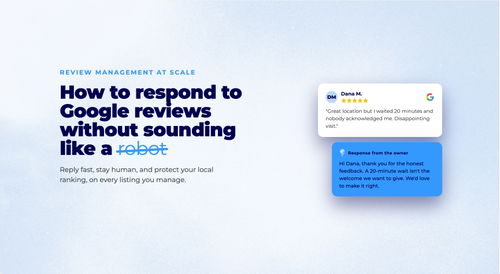
How to Respond to Google Reviews at Scale Without Sounding Like a Robot
Manage review responses across dozens of locations without losing authenticity. Templates, timing, and a workflow for enterprise-scale review management.
Daniel Melkersson
The New Rules of Google Ranking in 2026 (For Multi-Location Brands)
Google's CEO and Head of Search just confirmed five things about how ranking works in 2026. Here's what each one means for multi-location brands, and how to adapt.
Daniel MelkerssonFrequently Asked Questions
Why are Google reviews disappearing?
Are 5-star reviews more at risk?
Can deleted reviews be recovered?
Is it still safe to ask for reviews?
Are QR codes and in-store prompts risky?
Should we be concerned about negative reviews?
What changed the most in 2026?
Subscribe to Our Newsletter
Get local SEO tips, product updates, and marketing insights for multi-location brands delivered to your inbox.
Ready to boost your local visibility?
See how PinMeTo helps multi-location brands manage listings, reviews, and local SEO at scale.
Book a Demo