Local SEO Ranking Factors in 2026: How AI Changed Google Search Ranking
- Local SEO
- Multi-Location
- Google Business Profile
- Reviews & Reputation
- AI Search
Local discovery doesn’t happen in one place anymore. People bounce between Maps, AI answers, social platforms, and review sites often without ever clicking through to a website. Over half of searches can end without a click, and AI Overviews accelerate that pattern.
For multi-location brands, the implication is simple: “ranking” is no longer just a position in the map pack. It’s being reliably understood and confidently recommended across every surface where your locations show up.
This article breaks down the core local ranking signals, the 2026 shifts that matter, and how AI changes evaluation.
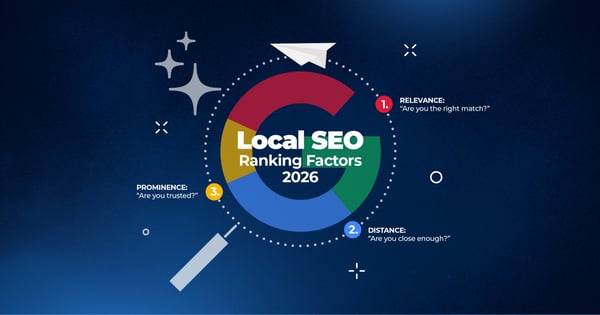
The 3 Core Local Ranking Signals
In its own documentation, Google is very clear: local results are primarily driven by relevance, distance, and prominence (Google also calls prominence “popularity”).
1) Relevance: “Are you the right match?”
Relevance is how well your location appears to match the query, based on:
- your primary and secondary categories
- services/products you explicitly list
- attributes (delivery, outdoor seating, wheelchair access, etc.)
- your website content that supports those claims
Nowyou don’t just “target keywords,” you make it easy for systems to understand what you do, for whom, and under what conditions.
2) Distance: “Are You Close Enough?”
Distance is heavily tied to the searcher’s location (or the location implied in the query). You can’t change where users are, but you can prevent distance from being misread by ensuring:
- correct addresses and pins
- consistent NAP data
- no duplicate/merged listings
3) Prominence: “Are You Trusted?”
Prominence is your “proof” layer:
-
review volume + quality + freshness
-
brand mentions across the web
-
links and authoritative coverage
-
consistency across key platforms
What’s Changed in 2026
1. Your GBP Is Still Your Core Local Dataset
Google Business Profile remains the most powerful lever for local visibility. It’s structured, actively crawled, and powers both Maps and AI features. Maintaining a clean, accurate GBP is more than hygiene as it’s foundational visibility infrastructure.
For multi-location teams, that means:
- category governance: who controls what, and how often
- complete attributes across every location
- real-time accuracy for hours (including holidays)
- structured updates to photos, Q&A, and service info
Dive into more winning tactics on How to Put Your Business on Google
2. “Open now” Status Became a Real Ranking Lever
Multiple studiesand industry commentary show rankings can change depending on whether a business is open at the time of search, and this has been observed since late 2023.
What to do with this:
- audit competitor hours in your category and region
- fix mismatches between real hours and listed hours
- treat special hours as a first-class workflow
3. Review Recency + Review Language Matter More Than “Star Rating”
Reviews are no longer just conversion copy. They’re a ranking input and a summarization input (AI systems read them and extract themes).
Industry research keeps reinforcing two practical truths:
- recency (a steady stream beats bursts)
- content (what people say about you, not only the score)
For multi-location teams, this means:
- ask continuously, not seasonally
- prompt for specifics (“What did we help you with?” “Which service did you use?”)
- respond at scale with clear rules (especially to negative feedback)
Learn how to Ask for Google Reviews effectively and why they matter more than ever.
4. Citations Are “Back” Because AI Needs Testimonials
For years, people argued citations were dying. In 2026, the more accurate framing is: citations never stopped being a trust layer, and AI discovery increases their value.
The Whitespark 2026 research commentary highlights citation-like signals (including “best of” lists and authoritative mentions) as influential in AI visibility contexts.
The takeaway here is not “be everywhere,” it’s:
-
have accurate info on the big platforms
-
be consistent across your ecosystem
-
earn a small number of high-quality mentions that reinforce what you’re known for
What AI changed: Ranking is Now Also “Inclusion”
1. AI Overviews and The Zero-Click Reality
AI Overviews can answer the question directly, pulling supporting links and business details, which means visibility is often impression-led, not click-led.
Google states there are no special optimizations required to appear in AI Overviews beyond strong SEO fundamentals and eligibility for snippets.
At the same time, measurement has to mature: “Over half of searches end without a click” is a widely cited reality, and AI features add more reasons users don’t need to visit a site.
So what do you optimize for being the best-supported answer?
- clear attributes and services
- consistency across sources
- review themes that match real intent (“great with kids”, “wheelchair accessible”, “fast service”, “quiet seating”)
Dive deeper into winning AI SEO Hacks to stay ahead of competition.
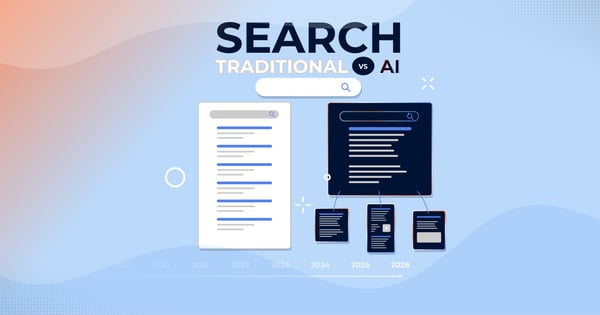2. Local Pages Need Clear, Useful Answers to Rank
When systems can extract meaning from specific passages, your location pages can win long-tail discovery if they contain the answer in plain language.
Instead of “SEO copy,” think:
- short FAQs per location (parking, accessibility, services, pricing signals)
- concise “what to expect” sections
- locally specific proof (testimonials, photos, policies)
3. AI Confidence = Consistency Across the Entire Ecosystem
AI systems don’t “trust” a single source, and they triangulate. For multi-location brands, inconsistency usually comes from:
-
local managers editing listings ad hoc
-
outdated store locator data
-
different phone numbers across platforms
-
old addresses from legacy directories
Enhancing Online Visibility at Scale
Local ranking factors in 2026 are interconnected signals: data accuracy, reviews, engagement, structure, and competitive context that’s evaluated across search, maps, social, and AI-driven discovery.
Executing it consistently across hundreds of locations is the real challenge. Local marketing platforms like PinMeTo provide the control layer for your local presence, keeping listings, pages, and reputation structured and aligned wherever discovery happens.
PinMeTo’s Places AI builds on that foundation by identifying the next winning action for each location to strengthen visibility, trust, and measurable outcomes.
Instead of chasing channels, brands focus on signal clarity at scale and ensure every location is positioned to win, no matter how the world searches next.

Checklist: Rank and Get Included in 2026
- NAP is consistent across major directories and platforms
- Every location profile is complete, verified, and governed
- Primary category is correct; attributes are filled at scale
- Hours + special hours are accurate and maintained
- Each location has a useful landing page with real local detail
- Reviews are generated continuously; responses follow a standard
- Structured data exists and matches on-page reality
- Duplicates and legacy listings are actively managed
- Reporting focuses on visibility + actions, not clicks alone
To Sum Up
In 2026, local SEO is less about chasing a single algorithm and more about building confidence:
- confidence that each location is real, accurate, and active,
- confidence that customers consistently validate you,
- confidence that your data matches across the ecosystem.

Recommended Articles
Why Google Reviews Are Being Removed in 2026 And What Brands Should Do About It
Learn why Google reviews are being removed in 2026 and discover strategies for maintaining authentic, trustworthy review signals across multiple locations.
Lily Adamyan
Understanding Google Local Algorithm for Multi-Location Brands
Boost your multi-location brand’s visibility by mastering Google’s local algorithm. Learn actionable tips on optimizing your profile, reviews, and local SEO strategy.
Lily Adamyan
3 Onsite Tactics to Boost Local SEO: Using Local Business Schema Markup for Multiple Locations
Boost your local SEO with 3 powerful onsite tactics. Discover how local business schema for multiple locations can make each brand location gain local visibility by...
Lily AdamyanFrequently Asked Questions
Is “traditional SEO” still relevant for local visibility?
Do I still need unique pages for each location?
What’s the biggest AI impact on local search right now?
Can I use AI to generate local content?
How often should I audit listings?
Subscribe to Our Newsletter
Get local SEO tips, product updates, and marketing insights for multi-location brands delivered to your inbox.
Ready to boost your local visibility?
See how PinMeTo helps multi-location brands manage listings, reviews, and local SEO at scale.
Book a Demo