GEO for Multi-Location Brands: The Complete Guide (2026)
- Local SEO
- Multi-Location
- How-to Guides
- AI Search
The search landscape shifted quietly but fundamentally. According to recent data, 58% of consumers now use generative AI for product discovery, and that number keeps climbing. For multi-location brands, this isn’t a minor SEO update. It’s a structural change in how customers find you.
The real question is: Are you optimized for AI-powered search, or are you still playing by last decade’s rules?
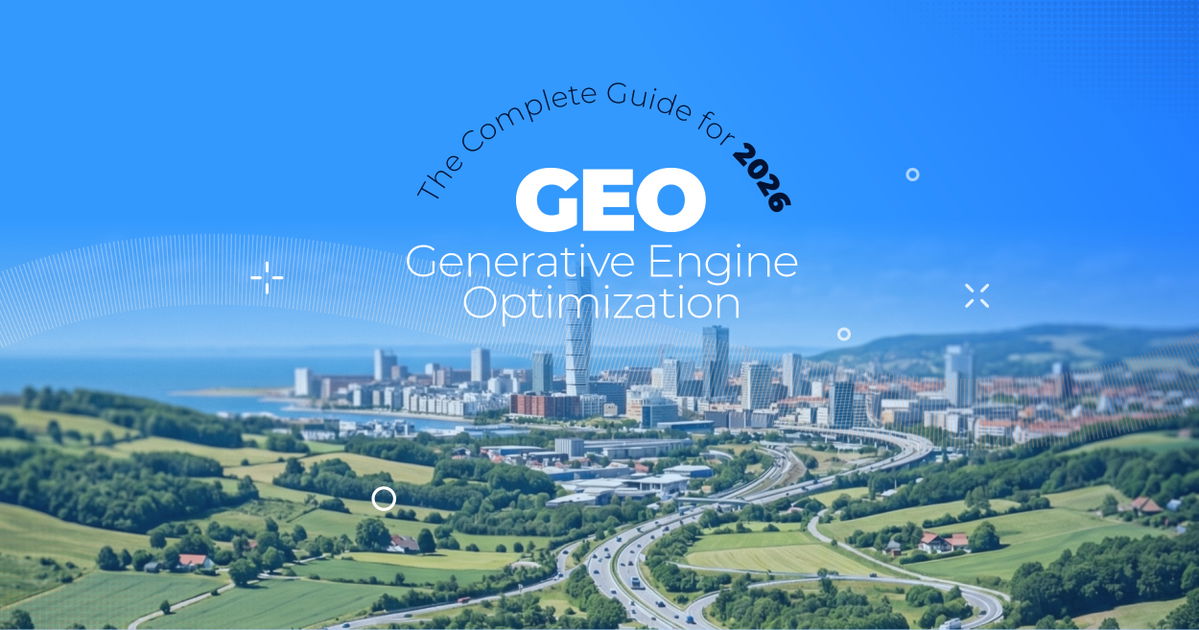
This guide walks you through Generative Engine Optimization (GEO), the framework that bridges traditional local SEO and AI search visibility. We’ll show you exactly how AI Overviews select sources, what “content extractability” means for your brand, and the specific steps your multi-location team can take today to compete in an AI-first search environment.
What Is Generative Engine Optimization (GEO)?
Generative Engine Optimization is the practice of structuring your brand’s content, data, and online presence so that AI-powered search systems (like Google’s AI Overviews) can discover, understand, and cite your information as authoritative sources.
It’s not replacing traditional SEO. It’s evolving it.
Traditional SEO optimizes for Google’s link-based ranking algorithm: acquire backlinks, rank for keywords, drive clicks to your site.
GEO optimizes for two concurrent search behaviors:
- Direct AI citation (appearing in AI Overviews, Perplexity answers, ChatGPT-powered searches)
- Reinforced traditional ranking (staying visible in the organic results beneath AI Overviews)
For multi-location brands, GEO is uniquely powerful because AI systems are inherently local-aware. They cite location-specific sources, aggregate location data, and personalize results based on user geography. If your location data is clean, structured, and optimized, AI systems will cite you repeatedly across dozens of user queries.
Why Multi-Location Brands Need GEO in 2026
Before GEO, a multi-location brand’s visibility challenge was linear: optimize each location page, build local citations, manage reviews. The payoff was also linear: rank in Google organic results for that location.
AI Overviews changed the math entirely.
Here’s what the data shows:
-
Citation patterns in AI Overviews have shifted significantly. An initial Ahrefs study (July 2025) found that 76.1% of cited URLs also rank in the top 10 organic results. However, a more recent analysis of 4 million AI Overview URLs (Ahrefs, February 2026) found this has dropped to 38%, suggesting AI systems are increasingly drawing from a wider range of sources beyond traditional top-10 rankings. This remains important: ranking well still improves citation likelihood, but the relationship is less exclusive than initially thought.
-
AI Overviews appear for approximately 47% of Google searches globally (DemandSage). For local queries (“best restaurants near me,” “plumbers in Denver,” “hair salons open now”) the presence rate is even higher, often reaching 70%+.
-
Brands with properly structured location data capture significantly more AI citations than those with inconsistent or incomplete data, a pattern we’ve observed across hundreds of multi-location implementations.
What this means in practice: A single update to your structured location data can ripple across dozens of locations simultaneously. You’re not optimizing 100 pages; you’re optimizing a data architecture that feeds hundreds of pages.
How AI Overviews Select and Cite Sources
Understanding the citation mechanism is the foundation of GEO strategy.
Google’s AI Overviews don’t just search the web randomly. They:
- Identify the intent of the query (informational, transactional, navigational, local)
- Retrieve high-ranking, authoritative sources from Google’s index (those top-10 results)
- Extract relevant information from those sources using models trained to understand context
- Synthesize and cite the most relevant sources inline
For local queries, Google’s AI systems also:
- Cross-reference location data from Google Business Profiles, local directories, and structured data on your website
- Verify business information against trusted sources (Google Business Profile documentation, Maps, NAP directories)
- Personalize results based on the user’s location
- Weight recent updates more heavily (your hours, specials, announcements)
The critical insight: AI Overviews are biased toward sources that are already ranking well and have clean, structured data.
This is different from traditional SEO, where you might rank through brand authority or content quality alone. For GEO, you need both ranking and data extractability.
Content Extractability: The GEO Secret Weapon
“Content extractability” is a term that rarely appears in traditional SEO guides, but it’s central to GEO success.
It simply means: Can an AI system easily pull accurate information from your content?
Consider a few examples:
Low extractability:
- Hours listed only as an image or PDF
- Phone numbers buried in a paragraph
- Service areas mentioned vaguely (“We serve the greater metropolitan area”)
- Mixed or contradictory information across pages
High extractability:
- Hours in schema markup (JSON-LD) and human-readable text
- Phone number in a consistent format, near the top of the page
- Service area explicitly listed as a list of cities or zipcodes
- NAP (Name, Address, Phone) consistent across all pages and directories
For multi-location brands, extractability is amplified because:
If your location data is inconsistent across your site, Google’s AI system has to make inferences or choose between conflicting sources. This lowers your citation likelihood and trust score. Conversely, if your data is crystal-clear and consistent, AI systems cite you confidently and repeatedly.
Practical extractability improvements for your team:
- Standardize all structured data: Use schema markup (Organization, LocalBusiness, Place) consistently across all pages
- Move critical info above the fold: Hours, phone, address should be immediately visible (not hidden in dropdowns or footers)
- Duplicate key data in schema and text: Don’t rely on schema alone; ensure human-readable info matches
- Version your location data: Create a single source of truth (a feed or database) that all pages pull from, eliminating inconsistencies
- Test extractability monthly: Use Google’s structured data tools to verify schema is being read correctly
Traditional SEO vs. GEO: The Key Differences
This table illustrates where these strategies diverge and overlap:
| Dimension | Traditional SEO | GEO | Both? |
|---|---|---|---|
| Primary goal | Rank in organic results | Appear in AI Overviews & maintain ranking | Both (they reinforce each other) |
| Citation mechanism | Backlinks | Source extraction + data structure | Backlinks inform ranking; structure informs extraction |
| Keyword optimization | Page-level keyword targeting | Intent-aligned, conversational content | Both (intent-driven keywords rank well) |
| Local data | Listings, NAP consistency | Structured location feeds, real-time updates | Both (NAP consistency enables both) |
| Content length | Longer is often better | Concise, extractable answers matter most | Concise, high-quality content works best |
| Update frequency | Regular freshness helps | Real-time freshness critical (hours, availability) | Both (freshness is increasingly important) |
| Multi-location strategy | Optimize each location page | Optimize the data infrastructure | Both (infrastructure supports individual pages) |
The bridge concept: Traditional SEO ranking is a prerequisite for GEO success. You can’t appear in AI Overviews if you’re not ranking in the top 10. But ranking alone isn’t sufficient: your content must also be extractable, and your data must be structured and consistent.
In practice, a winning 2026 strategy does both simultaneously.

The GEO Framework: 4 Pillars for Multi-Location Brands
Here’s the actionable framework your team should implement:
Pillar 1: Data Foundation (Weeks 1 to 4)
Your location data is the currency of GEO. Without a clean foundation, nothing else works.
Steps:
- Audit all current location data: Pull all locations from your website, Google Business Profile, directories, and any third-party systems. Flag inconsistencies.
- Establish a single source of truth: Create a master location database (spreadsheet, CMS, or dedicated tool) that includes: Name, Address, Phone, Hours, Website, Service Areas, Descriptions.
- Correct NAP inconsistencies: Ensure Name, Address, Phone are identical across all channels (website, Google Business Profile, directories, social media). Learn more about why NAP consistency matters.
- Verify Google Business Profile accuracy: Update every location’s GBP profile with current hours, services, photos, and attributes. This is cited directly by AI Overviews.
- Submit structured data feeds: Use Google Business Data or similar to push location data directly to Google’s systems.
Why this matters: AI systems cross-reference multiple sources. If “123 Main St” appears on your site but “123 Main Street” appears on a directory, the system notes the discrepancy and lowers its confidence in both. Consistency removes this friction.
Pillar 2: Structured Data Implementation (Weeks 3 to 6)
Structured data is the language AI systems speak. It’s how you make your content machine-readable.
Essential schema for multi-location brands:
{
  "@context": "https://schema.org",
  "@type": "LocalBusiness",
  "name": "Your Brand - City Name",
  "address": {
    "@type": "PostalAddress",
    "streetAddress": "123 Main St",
    "addressLocality": "Denver",
    "addressRegion": "CO",
    "postalCode": "80202",
    "addressCountry": "US"
  },
  "telephone": "+1-303-555-0123",
  "image": "https://yoursite.com/location-image.jpg",
  "openingHoursSpecification": [
    {
      "@type": "OpeningHoursSpecification",
      "dayOfWeek": "Monday",
      "opens": "09:00",
      "closes": "17:00"
    }
  ],
  "geo": {
    "@type": "GeoCoordinates",
    "latitude": "39.7392",
    "longitude": "-104.9903"
  },
  "sameAs": [
    "https://www.facebook.com/yourpage",
    "https://maps.google.com/?cid=..."
  ]
}
Implementation checklist:
- Add LocalBusiness schema to every location page
- Include hours, address, phone, and geo coordinates
- Add opening hours specification (Google’s AI system loves this)
- Link to Google Business Profile via
sameAs - Test with Google’s Rich Results Test
Tip for multi-location brands: Templatize this schema. Generate it from your master location database so every page has consistent, accurate markup. Use JSON-LD (not microdata), and place it in the <head> tag. For location-specific markup, see Google’s local business structured data documentation.
Pillar 3: Content Optimization for Extractability (Weeks 5 to 12)
Your content should answer the questions AI systems ask about your brand.
For location pages, prioritize:
- Descriptive location-specific content: Don’t just copy-paste corporate boilerplate. Include: “This Denver office serves metro area businesses with XYZ services. We opened in 2015 and have a team of 12 specialists.”
- Conversational, intent-aligned answers: Write for queries like “What are your hours?” “Do you offer virtual appointments?” “Can I book online?” AI Overviews often pull direct answers from these sections.
- Local service area clarity: Explicitly state which neighborhoods, cities, or zipcodes you serve. Example: “We provide roofing services in Boulder, Broomfield, Lafayette, Louisville, and the surrounding areas.”
- Unique value propositions per location: If a location has a specialty, highlight it. “Our San Francisco office specializes in biotech consulting.”
- Recent, dated content: Blog posts, announcements, or case studies with publication dates signal freshness to AI systems.
Avoid:
- Generic, location-neutral boilerplate
- Hours or contact info that’s hard to parse
- Vague service area descriptions
- Outdated content without dates
Pillar 4: Ongoing Monitoring and Iteration (Continuous)
GEO is not a one-time project. AI systems are evolving rapidly, and your data changes frequently.
Monthly checklist:
- Monitor AI citations: Use tools like SEMrush or Ahrefs to track which of your pages appear in AI Overviews. Note patterns (which locations? which queries?).
- Verify ranking stability: Ensure your locations still rank in the top 10 for target queries. If ranking drops, address it immediately; AI can’t cite you if you’re not ranking.
- Audit Google Business Profile updates: Check that hours are current, photos are recent, and any seasonal changes are reflected.
- Test extractability: Periodically re-test your schema with Google’s tools. Look for warnings or errors.
- A/B test content formats: Try different ways of presenting key info (bullet lists vs. paragraphs, visual vs. text) and track which gets cited more often.
- Update location data feeds: If you add hours, specials, or service area changes, push those updates to Google Business Data and your website immediately.
How to Manage GEO at Scale for 50+ Locations
Here’s where theory meets practice.
For a single-location business, implementing the GEO framework above is manageable: a few weeks of work, ongoing monthly maintenance.
For 50, 100, or 500 locations? The coordination challenges multiply. You’re managing location data across multiple systems, ensuring consistency at scale, and monitoring AI citations across hundreds of pages. Most teams need tooling to handle this efficiently.
What to look for in a location data platform:
Rather than manually maintaining location data across your website, Google Business Profiles, directories, and AI-optimized feeds, a dedicated platform can centralize the work. The right platform should:
- Unify location data from your existing systems (CMS, ERP, spreadsheets) in one source of truth
- Automatically maintain NAP consistency across all channels (website, Google Business Profile, directories)
- Generate AI-optimized structured data and deploy it across your site
- Monitor AI citations and alert you when ranking or citation rates change
- Provide real-time updates for hours, services, and availability, which is critical for GEO extractability
For multi-location brands, this transforms GEO from a complex, manual project into a scalable, automated workflow. Your team isn’t spending weeks building location data infrastructure; they’re using that time to create unique, location-specific content and strategy.
GEO Readiness Checklist for Multi-Location Brands
Use this checklist to assess your current state and prioritize next steps.
Phase 1: Foundation (Critical)
- All locations have accurate, consistent NAP data across website, Google Business Profile, and major directories
- Google Business Profile is fully completed for every location (hours, services, photos, attributes)
- Location data is centralized in a single source of truth (database, tool, or managed service)
- No NAP discrepancies exist across systems
Phase 2: Structured Data (High Priority)
- LocalBusiness schema is implemented on every location page
- Schema includes: name, address, phone, hours, coordinates, and service area
- Schema is tested and validates without errors in Google’s Rich Results Test
- Hours specification includes
openingHoursSpecification(not just text)
Phase 3: Content (High Priority)
- Each location page includes location-specific, non-generic content
- Hours, phone, and address are immediately visible (above the fold)
- Service area is clearly stated (neighborhoods, cities, or zipcodes served)
- Content answers common location-specific questions (hours, services, specialties)
- Recent content (blogs, case studies, announcements) has publication dates
Phase 4: Monitoring (Ongoing)
- You track which pages appear in AI Overviews (using SEMrush, Ahrefs, or manual checks)
- You monitor ranking for key location queries monthly
- You have a process for updating location data across all channels when changes occur
- You test structured data and content extractability quarterly
Common GEO Questions: Answered
Is GEO just rebranded SEO?
No, but they’re siblings, not duplicates. Traditional SEO focuses on ranking through links, keywords, and content quality. GEO focuses on data structure and extractability so that AI systems can cite you reliably. You still need strong SEO (to rank in the top 10), but GEO is the next layer. Think of it as SEO 2.0: optimizing for both human search and machine understanding.
Do I need to rewrite all my location pages?
Not necessarily. You need to ensure:
- NAP consistency (non-negotiable)
- Location-specific, extractable content (high value)
- Proper schema markup (essential)
If your location pages are already unique and well-written, adding schema and fixing NAP inconsistencies might be enough. If they’re generic boilerplate, rewriting them will significantly improve both traditional ranking and AI citation rates.
How long does it take to see GEO results?
Data updates (NAP corrections, schema implementation) typically impact AI citations within 2 to 4 weeks, depending on how frequently Google crawls your site.
Ranking improvements and increased organic traffic can take 4 to 12 weeks, as Google’s ranking algorithm is slower-moving than its AI citation system.
Content updates usually show impact within 2 to 6 weeks for AI citations, especially if the content answers specific user queries.
Start with data foundation and schema (quick wins), then layer in content optimization.
What if I’m already ranking well organically? Do I still need GEO?
Yes. Ranking well is a prerequisite for GEO success, but it’s not sufficient. If you’re in the top 10 but your data is inconsistent or your content isn’t extractable, you’re missing citations. Additionally, AI Overviews are beginning to replace organic clicks for some query types, so while traditional ranking remains important, GEO visibility is increasingly separate and critical.
How does GEO differ for service-area businesses vs. storefront locations?
Storefront locations (restaurants, retail, salons) benefit most from:
- Real-time data (hours, availability, inventory)
- Photos and visual content
- Review management
- Geographic coordinates and maps integration
Service-area businesses (plumbers, consultants, contractors) benefit most from:
- Clear service area definition (zipcodes, neighborhoods)
- Service category schema (very important for AI)
- Testimonials and case studies (proof of service delivery)
- Structured service descriptions
Both types need NAP consistency and schema, but the content emphasis differs. Adjust your strategy accordingly.
What tools should I use to manage GEO at scale?
For managing location data and monitoring GEO:
- Data centralization: PinMeTo (location data management)
- Monitoring: SEMrush, Ahrefs (AI citation tracking, ranking monitoring)
- Testing: Google Rich Results Test, Screaming Frog (schema validation)
- CMS integration: Ensure your website CMS can pull location data from your centralized source
Start with a spreadsheet or simple tool if you have fewer than 10 locations. At scale (25+), invest in a dedicated location data management platform.
Looking Forward: The GEO Landscape in 2026 and Beyond
The search ecosystem is shifting irreversibly toward AI-powered discovery. Here’s what’s coming:
In 2026:
- AI Overviews will likely appear for 70%+ of search queries in major markets
- Local queries will have even higher AI Overview presence (80%+)
- Real-time data (hours, availability, pricing) will be increasingly cited directly from APIs and structured feeds
- Google will roll out more features that reward consistency and extractability
Your competitive advantage: Brands that move to GEO now, before it becomes table stakes, will enjoy a 12- to 24-month window of outsized AI visibility and citations. Once competitors catch up (and they will), GEO will become the minimum expectation, like SEO today.
The time to optimize is now.
How to Audit Your GEO Readiness
You now have the framework, the specific steps, and the reasoning. The real question is: Where is your brand today, and what’s your first move?
If your location data is fragmented across tools, or your location pages are generic, start with Phase 1 (Foundation): get NAP consistency locked in. This single step unlocks the entire GEO funnel.
If you’re already consistent but lack schema and location-specific content, jump to Phase 2 and 3: this is where most of the citation wins happen.
Looking for ways to level up your local visibility? Explore how PinMeTo’s PLACES AI platform can centralize your location data, maintain consistency at scale, and automate the data infrastructure that GEO demands. Schedule a brief demo to see how your brand could benefit from a GEO-first approach.
The future of multi-location brand visibility is built on clean data, structured information, and content extractability. Get ahead of it.
Sources and References
-
Capgemini Research Institute, “What Matters to Today’s Consumer” (January 2025). Survey of 12,000 consumers across North America, Europe, and Asia-Pacific finding that 58% of consumers have replaced traditional search engines with Gen AI tools for product and service recommendations.
-
Ahrefs, “Search Rankings and AI Citations Study” (July 2025). Initial analysis showing that 76.1% of URLs cited in AI Overviews also rank in Google’s top 10 organic results.
-
Ahrefs, “AI Overview Citations: Updated Analysis” (February 2026). Updated study of 4 million AI Overview URLs showing that citation patterns have shifted, with 38% of cited URLs now coming from outside the traditional top 10 rankings.
-
DemandSage, “AI Overviews Statistics”. Data indicating that AI Overviews appear for approximately 47% of Google searches globally.
-
Google, “Google Business Profile Help Center”. Official documentation on Google Business Profile features, data validation, and local business optimization.
Last updated: April 2026. The GEO landscape evolves rapidly. Check back quarterly for the latest developments and best practices.

Astghik Nikoghosyan
Growth Marketing Manager
Astghik writes about SEO, AI Optimization (AIO), and local growth strategies for multi-location brands, covering everything from managing listings to building stronger visibility in both traditional search and AI-powered discovery.

Marcus Olsson
Co-founder & Head of AI
Marcus is the Co-founder and Head of AI at PinMeTo. He writes about artificial intelligence, machine learning applications for multi-location businesses, and how AI-driven insights can transform local marketing and brand management at scale.
Recommended Articles
How to Create Local Content That AI Search Engines Actually Cite
Optimize local content for AI search engines. Learn what makes AI cite your pages, plus a practical content audit framework for multi-location brands.
Marcus Olsson
Local SEO Ranking Factors 2026: A Practical Guide for Multi-Location Brands
A 2026 guide to local SEO ranking factors: Google's relevance, distance, and prominence, plus AI Overviews, review recency, and multi-platform strategy.
Astghik Nikoghosyan
The New Rules of Google Ranking in 2026 (For Multi-Location Brands)
Google's CEO and Head of Search just confirmed five things about how ranking works in 2026. Here's what each one means for multi-location brands, and how to adapt.
Daniel MelkerssonFrequently Asked Questions
What is Generative Engine Optimization (GEO)?
Is GEO just rebranded SEO?
How long does it take to see GEO results?
Do I still need GEO if I already rank well organically?
What's the ROI of GEO?
Can I implement GEO on a small CMS or custom platform?
Subscribe to Our Newsletter
Get local SEO tips, product updates, and marketing insights for multi-location brands delivered to your inbox.
Ready to boost your local visibility?
See how PinMeTo helps multi-location brands manage listings, reviews, and local SEO at scale.
Book a Demo